
BSc · Undergraduate
Sustainable Systems & Clean Energy
Connect engineering principles with environmental understanding to design more resilient energy and resource systems.
- Award
- BSc
- Indicative duration
- 4 years full-time
- Delivery
- Blended
- Academic school
- Sustainability
A deeper understanding.
A practical direction.
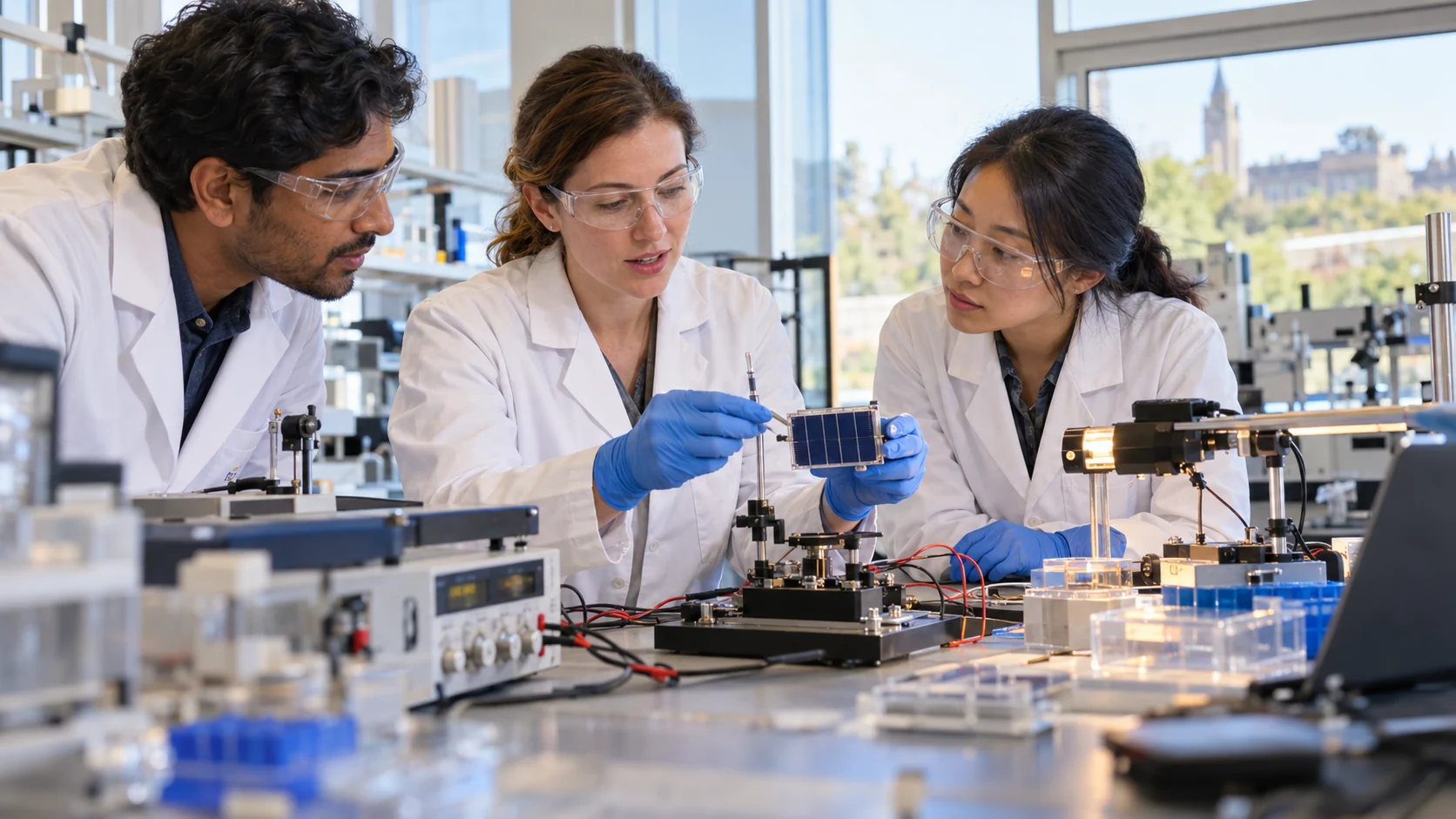
Explore how energy is generated, distributed and used, alongside the material and ecological systems on which communities depend. Laboratory learning, field observation and design projects help you evaluate practical alternatives.
What you will learn
- Analyse energy and material flows in a defined system.
- Apply mathematics and scientific principles to engineering problems.
- Compare technical solutions using environmental and economic criteria.
- Develop and test a practical sustainable-system prototype.
Your learning journey
The indicative curriculum builds from core understanding to independent work. Select a stage to explore its subjects.
Year 1 · Scientific foundations
- Engineering mathematics
- Physics for sustainable systems
- Environmental systems
- Technical communication
Year 2 · System principles
- Energy conversion
- Electrical systems
- Materials & manufacturing
- Measurement & instrumentation
Year 3 · Integrated design
- Renewable-energy systems
- Resource efficiency
- Design studio & fieldwork
- Project economics
Year 4 · Applied contribution
- Systems integration
- Industry design challenge
- Sustainable enterprise practice
- Capstone engineering project
PIEM in your programme
An industry-connected challenge
Design and test a small-scale energy-monitoring solution for a community facility and evaluate its potential to reduce waste.
Sustainable Systems Workshop
A supervised prototyping workshop providing energy assessments, monitoring prototypes and resource-efficiency studies.
Partner ecosystem
The programme’s partnership network is designed to include:
- Renewable-energy businesses
- Engineering consultancies
- Agricultural enterprises
- Community infrastructure organisations
Partner involvement can include project briefs, expert critique, practice insights and mentoring. Specific organisations and opportunities are confirmed for each cohort.
Understand the PIEM modelWhere your learning can lead
These are potential areas of work, not guaranteed outcomes. Career development combines academic learning, demonstrable project work and individual professional preparation.
Plan your study.
Use these details to compare your options. Confirm the approved specification before making a commitment.
- Next intake
- Intake dates to be confirmed
- Fees & funding
- Fee schedule awaiting approval. Explore cost planning.
- Study commitment
- Full-time pattern; weekly workload to be confirmed. Allow time for taught sessions, independent work, group projects and assessment.
- Practical requirements
- Scheduled practical attendance; locations and frequency to be confirmed before enrolment.
- Your support
- Academic feedback, study guidance and accessibility support arrangements to be confirmed for the cohort. Explore support.
Learning made visible
Follow a project from question to contribution.
See the decisions, outputs and reflection behind an illustrative PIEM experience connected to this field.
Explore a project conceptEntry, delivery & funding
Entry expectations
A secondary-school qualification supporting higher-education entry, including strong preparation in mathematics and a physical science. Practical requirements are discussed during admission.
Applicants whose previous education was not in English may need to demonstrate readiness to study in English. Country equivalence, evidence and any additional requirements are reviewed individually.
How you will study
Blended study combines digital learning with scheduled workshops, practical activity and supported collaboration. Practical locations and attendance requirements are confirmed before enrolment.
Assessment
Assessment may include analytical assignments, project work, presentations, practical demonstrations and an independent capstone. Clear criteria and feedback support your progress.